

Do you have what it takes to solve a murder?
This Thursday (10/22) put your detective skills to the test at our Teen Murder Mystery Program from 3:30-4:30 PM. Participants will step into an interactive mystery filled with suspects, clues, twists, and plenty of questions. Pay close attention, work together, and see if you can uncover the truth before the mystery is revealed.
From Parlor Games to Murder Mysteries
Long before murder mystery parties became popular, there were party games played in the parlors of middle class homes. These relied on conversation, imagination, questioning, and deduction. They included games like Wink Murder, which secretly assigned one person the role of the “murderer” while everyone else attempted to figure out their identity.
Mysteries and detective fiction began to become more popular towards the back half of the 19th Century. This was even more true when Sherlock Holmes came onto the scene. Sir Arthur Conan Doyle’s first novel featuring the famous detective, A Study in Scarlet, was published in 1887. As people become more well-versed in mysteries, these games became more elaborate. Instead of simply guessing, players could piece together an entire fictional crime.
Everyone on the Jury
One important step in the development of the modern murder mystery game came with the Parker Brothers game The Jury Box in 1937. The game placed players in the role of jurors in trial.
They were presented with a fictional criminal case, evidence, crime-scene photographs, and arguments surrounding the case. After reviewing everything, the “jury” had to decide whether the accused was guilty or innocent before the actual solution was revealed.
Sound familiar? Gathering evidence, discussing theories, and making a final accusation are still important parts of interactive mystery games today.
Colonel Mustard, in the Library with the Candlestick?
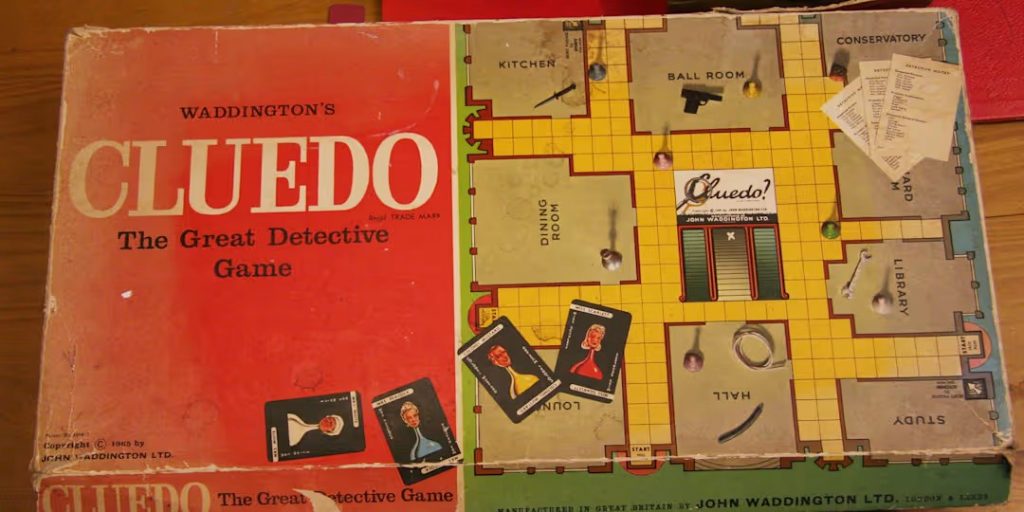
The mystery-game genre became even more recognizable with the arrival of Cluedo (better known as Clue in North America).
It was created by British game designer Anthony E. Pratt in the 1940s while he was confined to his house during World War II air raids. The game challenged players to determine three things: Who committed the murder? Where did it happen? And what weapon was used?
Its combination of deduction, suspects, locations, and hidden information helped make solving a fictional murder an activity families and friends could enjoy together.
Of course, we also appreciate that any mystery might have happened in the library.
Becoming Part of the Mystery
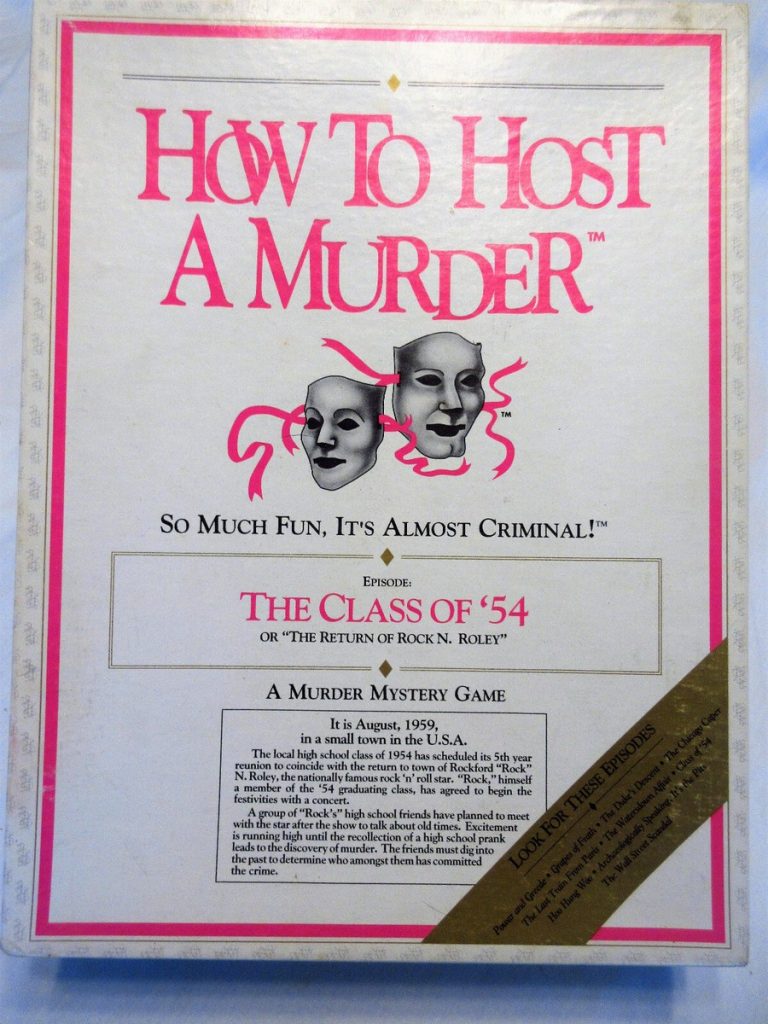
By the 1980s, murder mystery games were becoming more immersive. The How to Host a Murder game series were the first boxed “host a murder” games that allowed party guests to become the suspects themselves. Players received characters, motives, secrets, and clues while interacting with one another throughout the game.
Murder mystery dinner parties and interactive theater expanded the idea. Instead of simply watching a mystery unfold, audiences could question characters, search for clues, compare theories, and participate in solving the crime.
That interactive element remains arguably the biggest appeal of murder mystery games: you can become part of the story!
The Mystery Continues
Today, the popularity of true crime podcasts and TV shows has helped feed people’s appetite for more interactive mysteries. These now take many forms, from board games and dinner parties to escape rooms, theater productions, social deduction games, and digital experiences. The format has changed over time, but the challenge remains the same: pay attention to the clues, question everything, and figure out whodunnit.
Now it’s your turn to become the detective.
Join us for the Teen Murder Mystery at the DeKalb Public Library and see whether you can put the clues together and solve the case.
Will you uncover the truth- or will the culprit get away with it?
Are you interested in finding out more about Teen programs? The Teen Services staff are happy to help! You can also use your free DKPL library card to check out a variety of materials, including books to video games. Stop by the Teen Room with any questions or contact the Teen Services Staff at (815) 756-9568 ext. 2450 or by email at [email protected].