
Have you ever heard a strange story about an abandoned house on the other side of town, a mysterious figure lurking in the library, or a ghost who appears on a lonely road at midnight? Perhaps a stranger has told you about a friend of a friend who experienced something spooky, or you have come across a mysterious story online that seemed almost too strange to be true. These stories are known as urban legends.
In folklore, an urban legend is a story about an unusual, frightening, or humorous event that many people believe to be true, even though it is often false, exaggerated, or unsupported by reliable evidence. Urban legends capture our imaginations, reflect our fears, and encourage us to question what we think we know about the world around us. Unlike fairy tales, which are often set in imaginary worlds, urban legends usually take place in familiar, everyday settings like shopping malls, schools, parks, hospitals, and quiet neighborhoods. The ordinary surroundings make these stories feel believable, even when their endings may seem impossible.
The Origins and Characteristics of Urban Legends
Urban legends have existed in different forms for generations, but the term became increasingly common in folklore studies during the mid-20th century. It was used to describe modern stories that circulated through oral accounts and were often presented as genuine experiences. The phrase gained wider popularity in 1981 with the publication of The Vanishing Hitchhiker: American Urban Legends and Their Meanings by American folklorist Jan Harold Brunvand. The book explored how these stories spread, why people believed them, and what they revealed about society and culture. One of the defining characteristics of an urban legend is the way it is told. Stories frequently begin with phrases such as, “This happened to a friend of a friend,” giving the impression that the events are based on firsthand experience. The storyteller may not have witnessed the incident personally, but the connection to someone supposedly trustworthy makes the story seem more convincing.
Why Do People Believe in Urban Legends?
Urban legends are compelling because they often seem possible. Unlike supernatural stories set in distant fantasy worlds, they happen in places we recognize and involve situations we can imagine experiencing ourselves.
A few factors, in addition to the aforementioned “friend of a friend” connection to the narrative, help explain why these stories spread:
- Fear of the unknown: People are naturally curious about unexplained events. Stories involving ghosts, strange disappearances, mysterious illnesses, and hidden dangers appeal to our desire to understand what lies beyond our knowledge.
- Emotional impact: Frightening or shocking stories are often more memorable than ordinary information. People may share them because they want to warn others, entertain friends, or experience the excitement of telling a suspenseful tale.
- Cultural beliefs and social anxieties: Urban legends frequently reflect concerns about crime, technology, medicine, food safety, money, and changing social conditions. They offer a way for communities to express fears about things that feel unfamiliar or difficult to control.
Folklorists study these stories not only to determine whether their claims are true, but also to understand why certain narratives become popular. Even a completely fictional legend can reveal meaningful information about the society in which it circulates.
Famous Urban Legends That Continue to Fascinate Us
Some urban legends have become so widely known that they are now part of popular culture. The following three stories have likely chilled your bones or taken up space in your mind at some point in your life:
Bloody Mary
One popular legend involves a person standing in front of a mirror in a dark room and repeating the name “Bloody Mary” several times. According to the story, a mysterious figure or spirit may appear in the reflection.
The legend may have roots in older folklore, when mirrors were believed to have magical powers and could be used to communicate with spirits or predict the future. Some people connect the name to Mary I of England, known as “Bloody Mary,” although there is no clear evidence linking her to the ritual.
The legend became especially popular among children and teenagers during sleepovers, where it is often used as a test of courage. Although there is no reliable evidence that the ritual summons a spirit, the darkness, mirror, and anticipation can make the experience frightening.
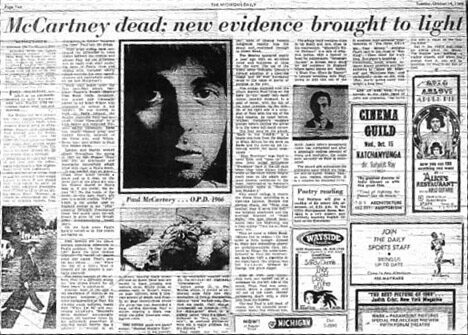
Paul is Dead
There are often blurred lines between urban legends and conspiracy theories. “Paul is dead” is a theory alleging that English musician Paul McCartney of the Beatles died in 1966 and was secretly replaced by a look-alike. The rumor began circulating in 1966, gaining broad popularity in September 1969 following reports on American college campuses. Rumors declined after Life published an interview with McCartney in November 1969.
According to the story, McCartney died in a car crash, and, to spare the public from grief, the surviving Beatles, aided by Britain’s MI5, replaced him with a McCartney look-alike, subsequently communicating this secret through subtle details of their albums. Proponents perceived clues among elements of Beatles songs and cover artwork; clue-hunting proved infectious, and by October 1969 had become an international phenomenon.
The phenomenon was the subject of analysis in the fields of sociology, psychology and communications during the 1970s. McCartney parodied the hoax with the title and cover art of his 1993 live album, Paul Is Live. The legend was among ten of “the world’s most enduring conspiracy theories” according to Time in 2009.
The Vanishing Hitchhiker
One of the most famous urban legends tells the story of a driver who picks up a mysterious hitchhiker on a deserted road. The passenger may appear cold, frightened, or unusually quiet. After a short journey, the passenger suddenly disappears from the vehicle. When the driver investigates, they discover that the person supposedly died years earlier. This story has many variations across cultures. In some versions, the passenger leaves behind an item of clothing; in others, the driver learns the passenger’s identity from a grieving family member.
A well-known Chicago-area variation is Resurrection Mary, a ghost said to appear to drivers near Resurrection Cemetery in the city’s southwest suburbs. According to the legend, a young woman in a white dress accepts rides from motorists before mysteriously disappearing. This twist in the original Vanishing Hitchhiker story demonstrates how urban legends can become closely connected to specific locations, allowing local communities to develop their own versions of a familiar tale.
From Urban Legends to the Horror Canon
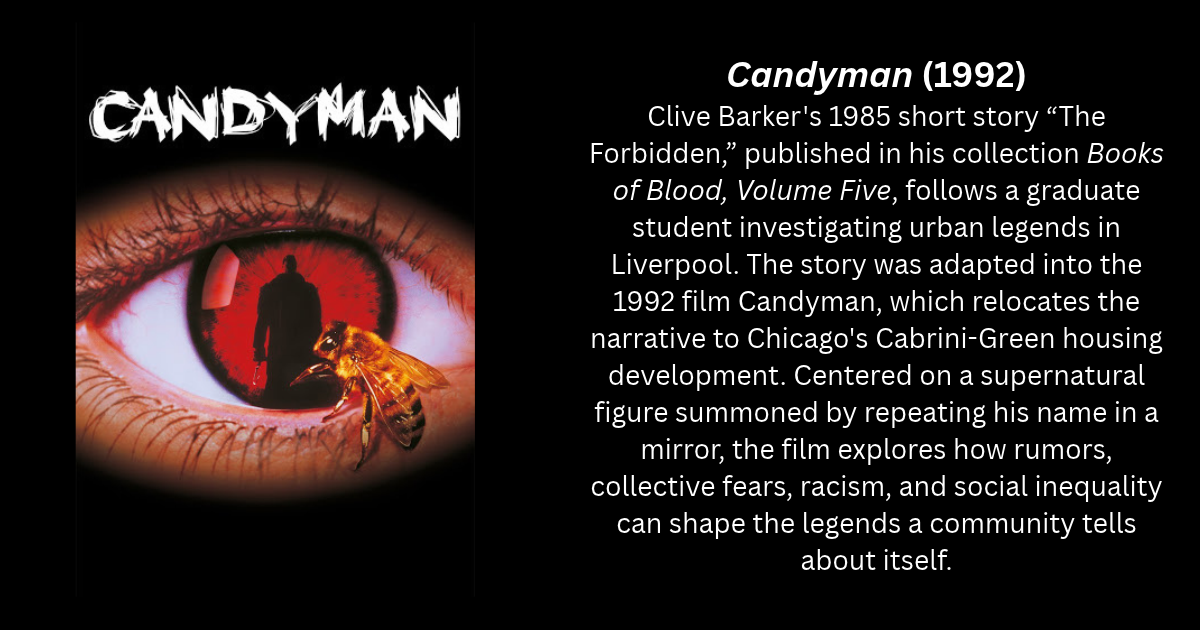
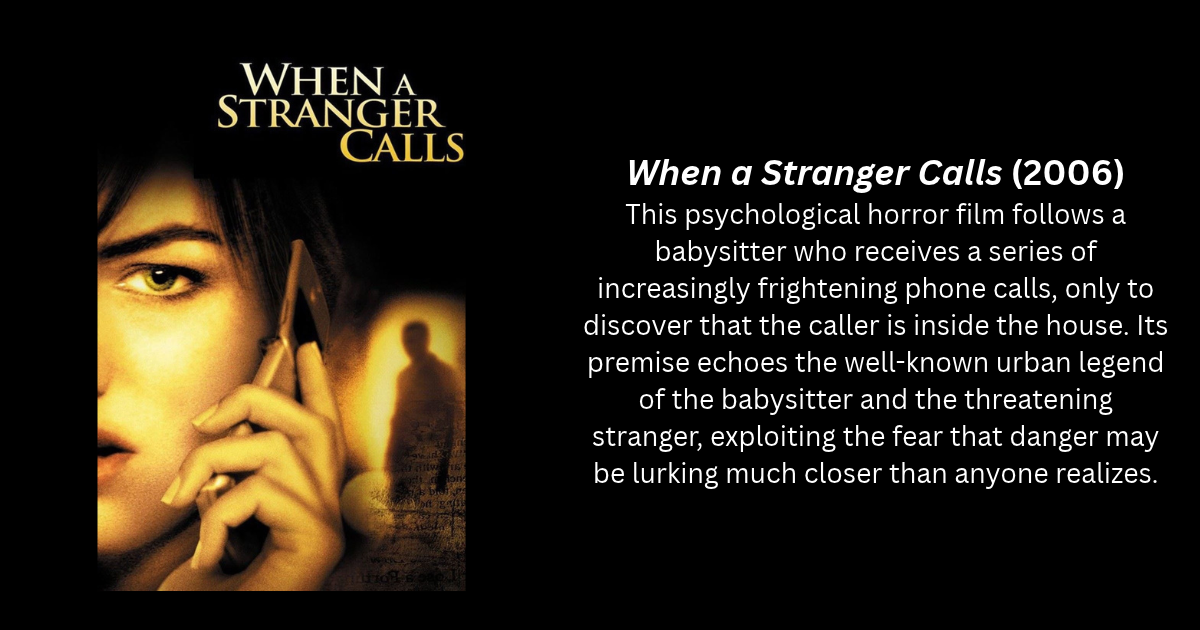
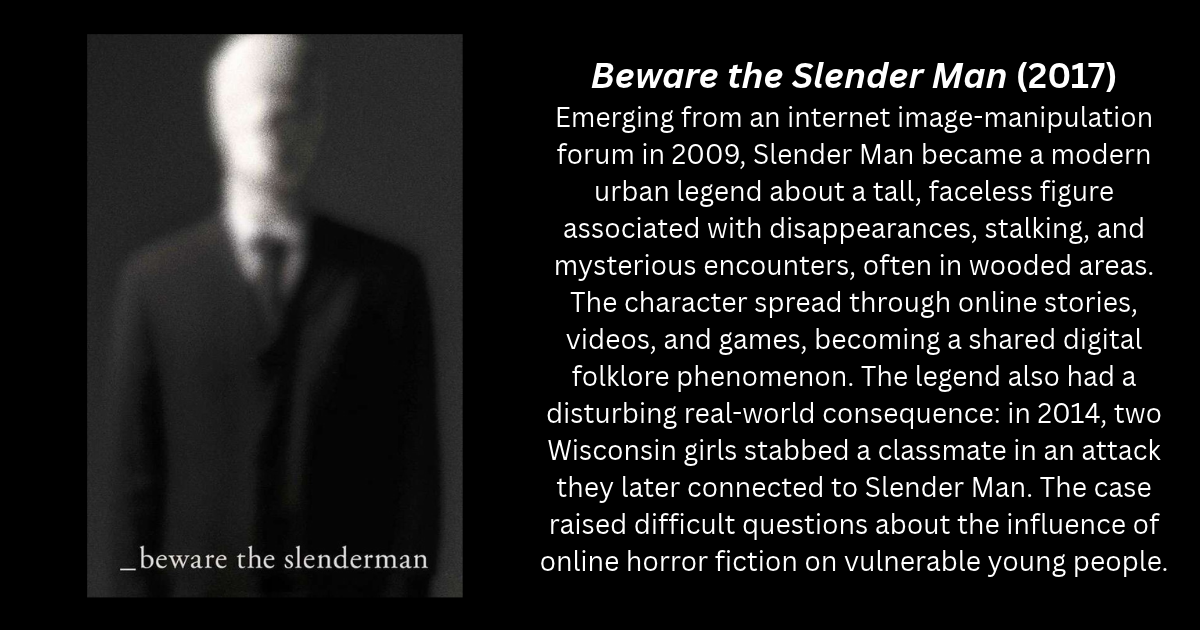
Urban legends have inspired some of our most memorable horror stories, imagining everyday fears, whispered warnings, and supposedly true encounters into chilling works of fiction that have transformed the way we look at everyday objects, situations, and encounters.

Want to Learn More? Come to Urban Legends: Fact or Fiction!
If learning about urban legends fascinates you, join us for an evening of intriguing tales and the history behind how they came to be at DeKalb Public Library on October 28 from 6:00- 7:00 PM! From strange and spooky to downright weird, we’ll explore urban legends and uncover the stories behind them. Are they based on fact or completely fictional? You decide!
DeKalb Public Library is here to help you stay informed and engaged in your community. We invite you to come create, collaborate, and grow with us! If you have questions about our building, services, materials, or any suggestions, please reach out to us at [email protected] or 815-756-9568 ext. 2150, or stop by and see us during our open hours. Happy reading!