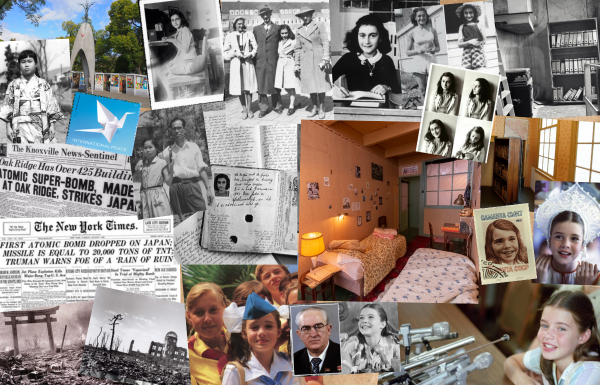
Coming upon another anniversary of the bombing of Hiroshima, we commemorate the lives of Sadako Sasaki, Anne Frank, and Samantha Smith—three remarkable young girls whose compassion, resilience, and courage left a lasting mark on the world. Though they lived in different countries and under very different circumstances, each responded to the challenges of her time with hope, conviction, and humanity.

Detail: Children's Peace Monument, Hiroshima Peace Memorial Park, Hiroshima, Japan.

Sadako Sasaki (1943–1955) was a Japanese girl who became an international symbol of peace. She was just two years old when the United States dropped an atomic bomb on Hiroshima on August 6, 1945. Although she survived the blast, she was diagnosed with leukemia ten years later, a disease widely linked to radiation exposure from the bombing.
While in the hospital, Sadako learned of a Japanese legend that anyone who folds 1,000 paper cranes will be granted a wish. Hoping for recovery and peace, she began folding cranes with remarkable determination and eventually folded well over 1,000 despite her worsening illness.
Sadako died on October 25, 1955, at the age of 12. Inspired by her courage, her classmates raised funds for a memorial honoring children affected by the atomic bombing. In 1958, the Children’s Peace Monument was unveiled in Hiroshima Peace Memorial Park, featuring a statue of Sadako holding a paper crane aloft. Today, it stands as a lasting symbol of peace and a reminder of the human cost of nuclear war.

Pages with text and photos from Anne Frank’s diary, written in October 1942.

Anne Frank (1929–1945) was a German-born Jewish girl whose diary became one of the most famous accounts of the Holocaust. After Nazi Germany occupied the Netherlands during World War II, Anne’s family went into hiding in a secret annex in Amsterdam to avoid persecution.
On her 13th birthday in 1942, Anne received a diary, which she named “Kitty.” Anne expressed the desire that her diary be the one person that she can call her truest friend – that is, a person to whom she could confide her deepest thoughts and feelings. She observes that she has had many “friends” and admirers, but no true, dear friend with whom she could share her innermost thoughts.
During more than two years in hiding, she wrote about daily life, her fears, hopes, and dreams while living under constant threat of discovery.
On August 4, 1944, the hiding place was discovered, and Anne, her family, and four others were arrested and deported to concentration camps. Anne and her sister Margot died of typhus at Bergen-Belsen in early 1945. Her father, Otto Frank, was the only member of the family to survive the war.
After the war, Otto published Anne’s diary as “The Diary of a Young Girl.” Translated into more than 70 languages, it remains one of the most influential firsthand accounts of the Holocaust.

Samantha Smith (second from right) is greeted by Russian Young Pioneers at the Moscow airport
in 1983/Getty images

Samantha Reed Smith (1972–1985) was an American peace activist and child actress who became famous during the Cold War. In 1982, at age ten, she wrote a letter to the newly installed Soviet leader, Yuri Andropov, asking why relations between the Soviet Union and the United States were so tense and whether war could be avoided.
Andropov replied in 1983 and invited Samantha and her family to visit the Soviet Union. Her goodwill mission attracted international attention, and during their two-week trip, she met Soviet citizens and children, earning the nickname “America’s youngest ambassador.” Through her, millions of Soviet people watched and judged the American people.
On August 25, 1985, while returning home from traveling with her father, their small plane crashed while approaching a runway in Maine, killing all aboard.
Despite her short life, Samantha Smith became an international symbol of peace and goodwill between Americans and Soviets during one of the most tense periods of the Cold War.
Want to learn more?
Attend our Folding Origami Cranes program in 309 Creative on August 6 from 3:00-4:30 pm. Contact the Tech Desk at [email protected], or call (815) 756-9568 ext. 6112, or our website for more information.
Until early 2027, Anne Frank The Exhibition, a presentation from the Anne Frank House in Amsterdam, is on display at Griffin Museum of Science and Industry in Chicago, Illinois. This immersive full-scale re-creation of Anne Frank’s hiding place allows visitors of all ages a chance to see original, never before exihibited artifacts.
Following are books written by the above youths and/or co-written by their families.
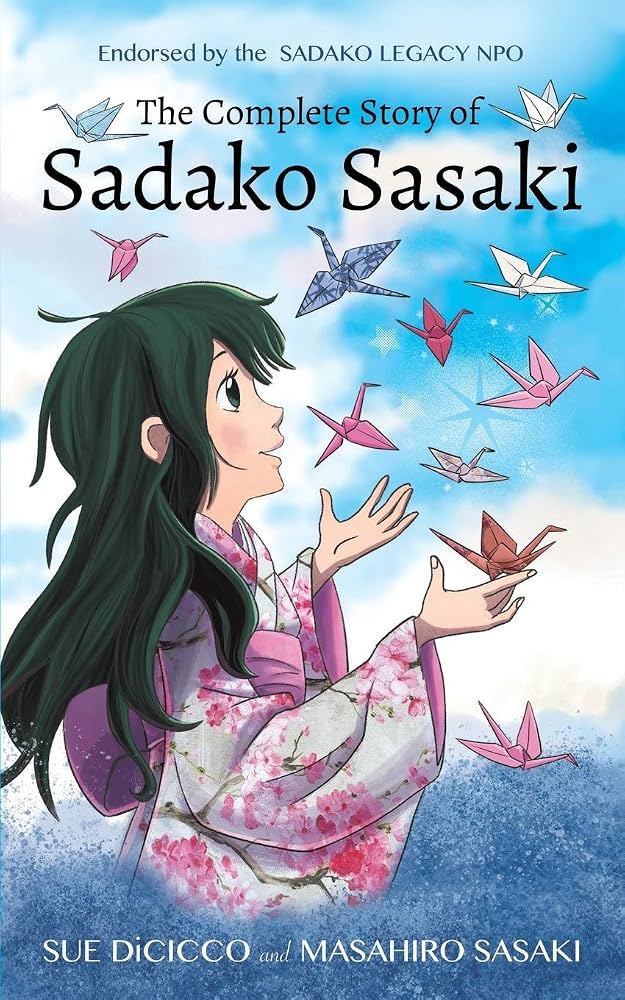
The Complete Story of Sadako Sasaki: and the Thousand Paper Cranes
by Sue DiCicco, Masahiro Sasaki
Published : 2018 | English
In this book, author Sue DiCicco and Sadako’s older brother Masahiro tell her complete story in English for the first time–how Sadako’s courage throughout her illness inspired family and friends, and how she became a symbol of all people, especially children, who suffer from the impact of war. Her life and her death carry a wholehearted desire for peace and be willing to work together to achieve it.
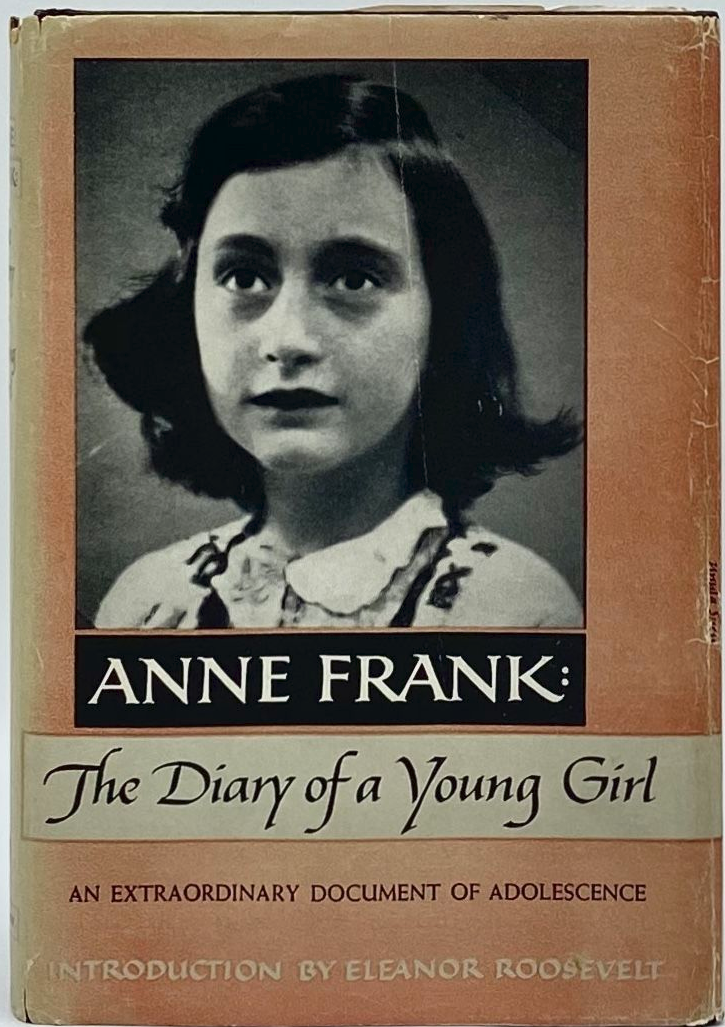
Anne Frank: The Diary of a Young Girl
Original Publication: June 25, 1947 in Dutch; 1st English Publication: 1952, with an introduction by Eleanor Roosevelt.
Anne Frank’s extraordinary diary, written in the Amsterdam attic where she and her family hid from the Nazis for two years, has become a world classic and a timeless testament to the human spirit.
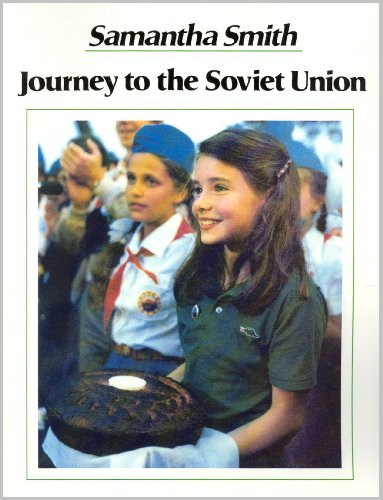
Journey to the Soviet Union
by Samantha Smith; Copyright 1985 by Arthur Smith and Samantha Smith
A ten-year-old from Maine describes her trip to Russia at the invitation of Yuri Andropov after writing him a letter expressing her fears about a nuclear war.
In 1982, young American Samantha Smith worried about war and dreamed of peace. While the United States and the Soviet Union (Russia) were still locked in the grip of the Cold War, she wrote to the Soviet leader. His three-page reply and her subsequent visit drew international attention.
Illustrated with many photographs, this is the inspiring story written by a young American girl whose historic trip in 1983 helped to end the Cold War.