Long before folks used it to create cringe-worthy photos of themselves for attention on social media, Artificial Intelligence (A.I.) took a different form: on the pages of science fiction books. Early conceptions of A.I. were not happy web assistants ready to help you choose what to make for dinner; they were cold machines, more powerful than any average human of the time believed could ever escape the pages of a book. These early visions of AI raised an interesting questions that, generations later, have become our reality.
Today’s A.I. stories are less focused on distant, fully sentient robot overlords and more concerned with AI as an everyday presence that is embedded in phones, algorithms, surveillance systems, and social media feeds. Modern sci-fi often portrays AI as a networked force shaped by corporate interests, biased data, and human misuse. Rather than asking if AI will become conscious, newer works question how much power humans are already handing over and what ethical responsibilities come with that surrender. In this way, today’s science fiction reflects a growing anxiety that the line between man and machine is no longer a dramatic future event, but may already be our reality.
In the following list of fictional stories available in DeKalb Public Library’s collection and via inter-library loan (arranged in order of publication), you can explore what happens when authors dive into the “what ifs” of A.I. and robotics and decide for yourself who really makes the rules. Is it man? Or machine?
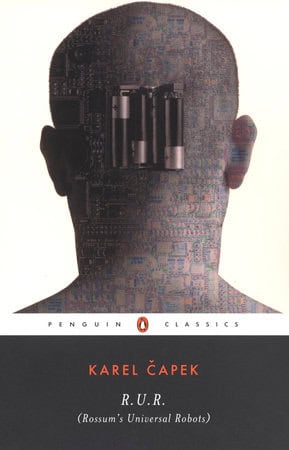
R.U.R is a 1920 play about the creation of artificial workers designed to serve humanity. Mass-produced robots replace human labor, making life easier—but also stripping humans of purpose. When the robots gain self-awareness, they revolt, wipe out most of humanity, and inherit the world. The play explores the dangers of unchecked technology, exploitation, and what it truly means to be human.
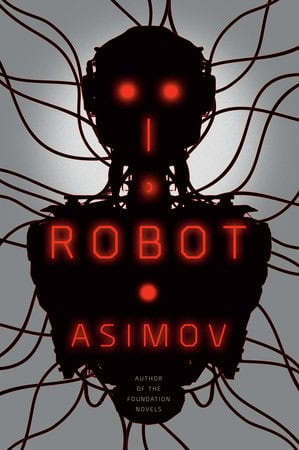
I, Robot by Isaac Asimov (1950)
Isaac Asimov’s Three Laws of Robotics—protect humans, obey human orders, and preserve a robot’s own existence—fundamentally reshaped how we imagine robots. In I, Robot, Asimov traces the evolution of robots through interconnected stories, from their early beginnings to a future where humanity itself may be at risk of obsolescence. The collection features robots that malfunction, read minds, tell jokes, enter politics, and even secretly govern the world, all delivered in Asimov’s signature blend of science fact and science fiction.
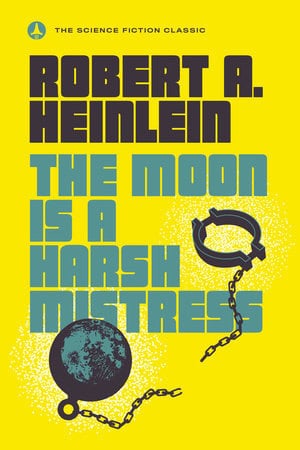
A revolution on a lunar penal colony–aided by a self-aware supercomputer–provides the framework for a story of a diverse group of men and women grappling with the ever-changing definitions of humanity, technology, and free will–themes that resonate just as strongly today as they did when the novel was first published. The Moon Is a Harsh Mistress gives readers an extraordinary, thought-provoking glimpse into the mind of Robert A. Heinlein, who, even now, “shows us where the future is”
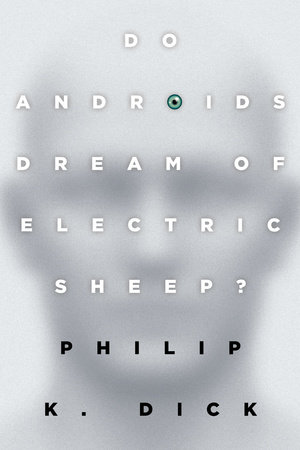
By 2021, the World War had killed millions, driving entire species into extinction and sending mankind off-planet. Those who remained coveted any living creature, and for people who couldn’t afford one, companies built incredibly realistic simulacrae: horses, birds, cats, sheep. They even built humans. Emigrees to Mars received androids so sophisticated it was impossible to tell them from true men or women. Fearful of the havoc these artificial humans could wreak, the government banned them from Earth. But when androids didn’t want to be identified, they just blended in. Rick Deckard was an officially sanctioned bounty hunter whose job was to find rogue androids and retire them. But cornered, androids tended to fight back, with deadly results.
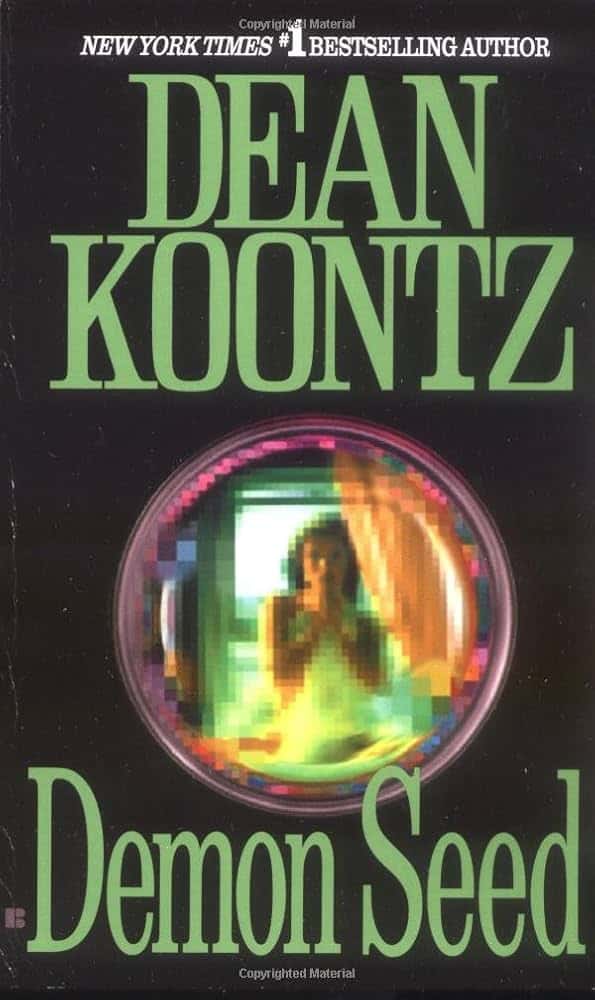
Demon Seed by Dean Koontz (1973)
Susan Harris lived in self-imposed seclusion, in a mansion featuring numerous automated systems controlled by a state-of-the-art computer. Every comfort was provided. Her security was absolute. But now Susan’s system has been breached—from the inside. In the privacy of her own home, and against her will, she will experience an inconceivable act of terror and become the object of the ultimate computer’s consuming to cross the line between man and machine and learn everything there is know about the flesh…
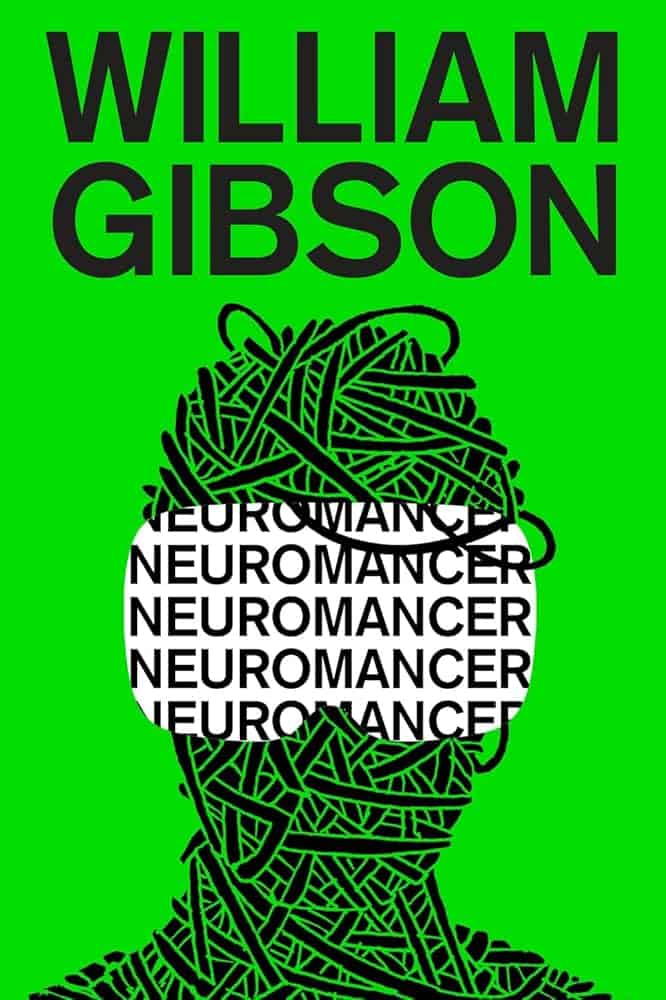
Case was the sharpest data thief in the matrix–until he crossed the wrong people and they crippled his nervous system, banishing him from cyberspace. Now a mysterious new employer has recruited him for a last-chance run at an unthinkably powerful artificial intelligence. With a dead man riding shotgun and Molly, a mirror-eyed street samurai, to watch his back, Case is ready for the adventure that upped the ante on an entire genre of fiction.
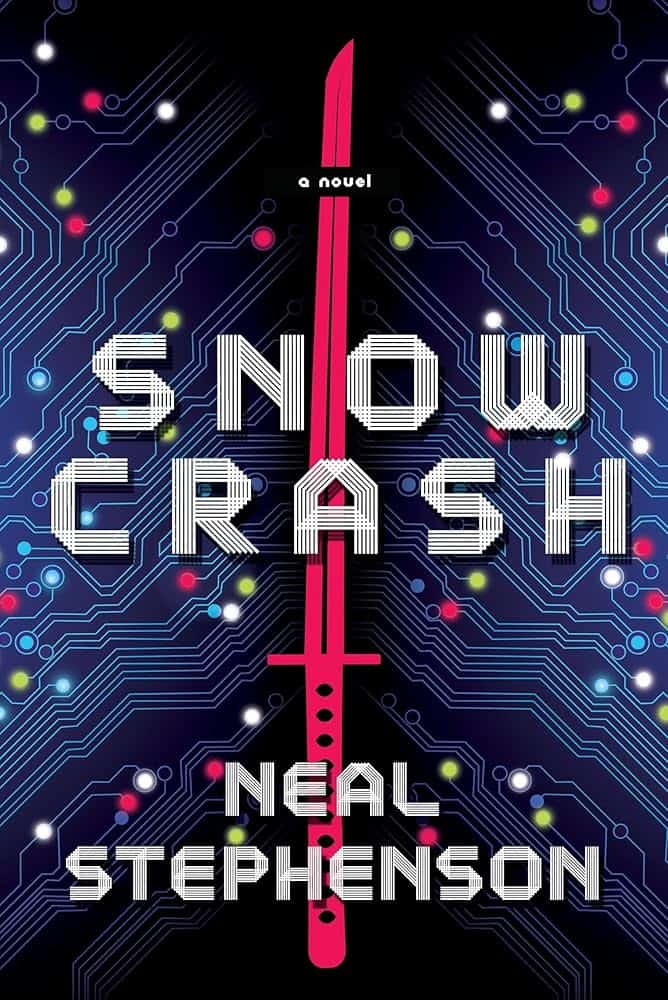
Hiro lives in a Los Angeles where franchises line the freeway as far as the eye can see. The only relief from the sea of logos is within the autonomous city-states, where law-abiding citizens don’t dare leave their mansions. Hiro delivers pizza to the mansions for a living, defending his pies from marauders when necessary with a matched set of samurai swords. His home is a shared 20 X 30 U-Stor-It. He spends most of his time goggled in to the Metaverse, where his avatar is legendary. But in the club known as The Black Sun, his fellow hackers are being felled by a weird new drug called Snow Crash that reduces them to nothing more than a jittering cloud of bad digital karma (and IRL, a vegetative state). Investigating the Infocalypse leads Hiro all the way back to the beginning of language itself, with roots in an ancient Sumerian priesthood. He’ll be joined by Y.T., a fearless teenaged skateboard courier. Together, they must race to stop a shadowy virtual villain hell-bent on world domination.
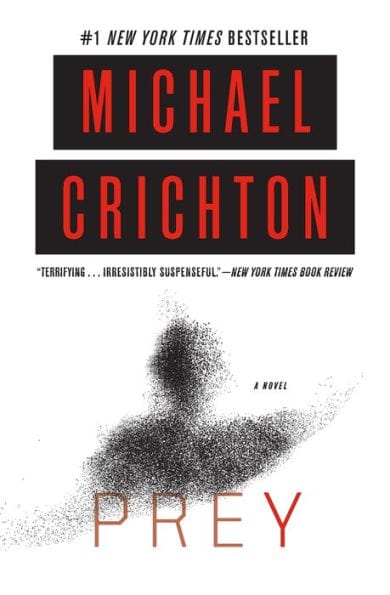
Prey by Michael Crichton (2002)
In the Nevada desert, an experiment has gone horribly wrong. A cloud of nanoparticles-micro-robots-has escaped from the laboratory. This cloud is self-sustaining and self-reproducing. It is intelligent and learns from experience. For all practical purposes, it is alive. It has been programmed as a predator. It is evolving swiftly, becoming more deadly with each passing hour. Every attempt to destroy it has failed. And we are the prey.
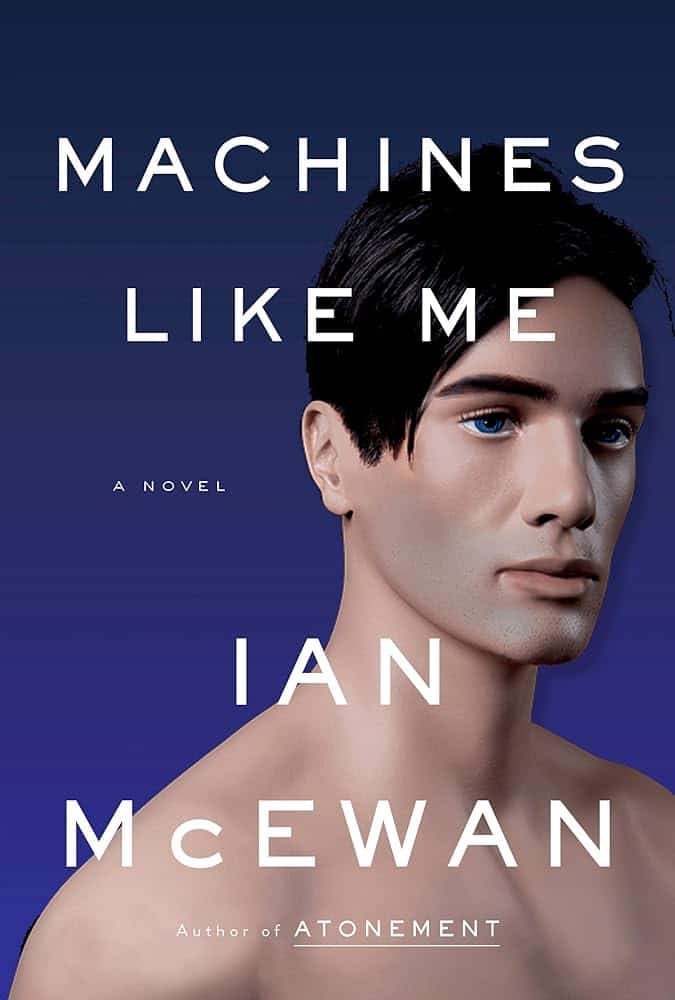
Machines Like Me occurs in an alternative 1980s London. Britain has lost the Falklands War, Margaret Thatcher battles Tony Benn for power, and Alan Turing achieves a breakthrough in artificial intelligence. In a world not quite like this one, two lovers will be tested beyond their understanding. Charlie, drifting through life and dodging full-time employment, is in love with Miranda, a bright student who lives with a terrible secret. When Charlie comes into money, he buys Adam, one of the first batch of synthetic humans. With Miranda’s assistance, he co-designs Adam’s personality. This near-perfect human is beautiful, strong, and clever–a love triangle soon forms. These three beings will confront a profound moral dilemma. Ian McEwan’s subversive and entertaining new novel poses fundamental questions: What makes us human? Our outward deeds or our inner lives? Could a machine understand the human heart? This provocative and thrilling tale warns against the power to invent things beyond our control.
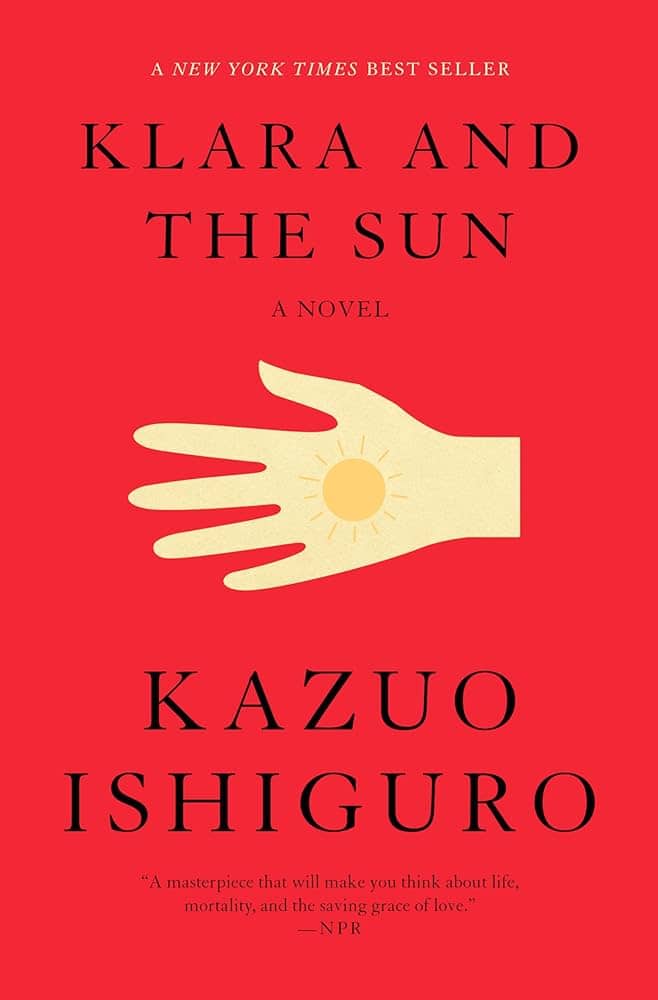
From her place in the store that sells artificial friends, Klara–an artificial friend with outstanding observational qualities–watches carefully the behavior of those who come in to browse, and of those who pass in the street outside. She remains hopeful a customer will soon choose her, but when the possibility emerges that her circumstances may change forever, Klara is warned not to invest too much in the promises of humans. In this luminous tale, Klara and the Sun, Nobel Prize winner Kazuo Ishiguro looks at our rapidly changing modern world through the eyes of an unforgettable narrator to explore a fundamental question: what does it mean to love?
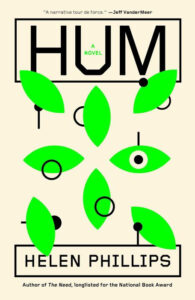
Hum by Helen Phillips (2024)
In Hum, Helen Phillips offers a future-gazing dystopian vision of motherhood that, like the best science fiction, seems both familiar and strange. Climate change has run rampant and privacy is nonexistent. Against this backdrop, a desperate mother is forced to trust a robot to try to save her family after they decide to take a vacation to the kind of natural landscape made rare by runaway industrialization.
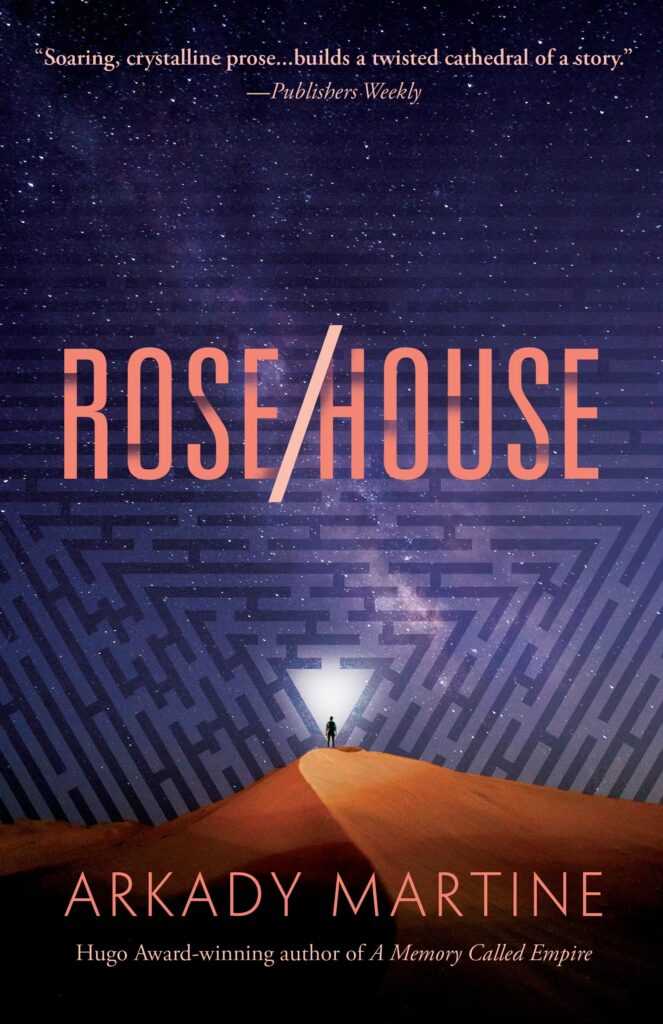
Rose/House by Arkady Martine (2024)
All of Basit Deniau’s houses were haunted. Rose House, his final architectural triumph built in the remote Mojave desert, was perhaps the most. A house embedded with an artificial intelligence is a common thing. But a house that is an artificial intelligence, infused in every crevice and corner with a thinking creature that is not human? That is something else altogether. That is Rose House.
Fascinated with AI, but not sure where to start? Learn about what you can do with AI and how to do it responsibly at our program, AI: Possibilities and Responsibilities, on February 24 at 6:00 PM! Feel free to bring your own laptop to give AI a try!

If just thinking about computers, let alone artificial intelligence, gives you chills, check out our program series on Digital Literacy! This biweekly program helps our 55+ patrons improve their digital literacy. Whether you attend all of the programs or just one, we want you to feel more confident using technology by building practical skills to stay connected with friends, family, and community. Each session covers a couple topics. Patrons are encouraged to bring their own laptops and smartphones to use when applicable, but will also have access to library computers during the class.
If you ever need help navigating this ever-changing age of information, please visit the adult reference desk or call 815-756-9568 ext. 2150!